This article was written by Mike Robinson-Johnson and was shared on his Facebook page on November 16, 2015.
Before becoming a branch of the Pueblo Community College Learning Tree, a different kind of seed was spread on the land.
Territorial Prison was originally opened in 1871 as the (then) Territory of Colorado’s first gated community… I mean prison… On land donated by Jonathan Draper.
But housing Colorado’s prisoners was getting costly and feeding them was no easy feat.
Obtained in 1911 by Colorado’s Territorial Prison, the piece of land P.C.C. sits on was once a bustling, not so little farm, and ranch. The prisons had decided that they needed to start farming at a larger scale to become self-sufficient and potentially bring in some money for the system. So, in 1916, they expanded the farm. While using inmate labor they built terraced farm beds, gravity fed water systems, and guard towers watching over different parts of the farm, as well as hand stacking rocks to build retaining walls for roads and other aspects of a larger farm operation.
Low security inmates were moved over and housed on a farm that started producing decent product at a low cost. They made the prison system completely self-sufficient supplying all the needed food for inmate meals, while also having excess product to start making a little money in the process. Selling in local stores and markets, a little money they made indeed, to the tune of $182,019 from 1912-1920 (worth $2.9 Million today).
Alas, that wasn’t meant to last though as the Hewes-Cooper Act of 1929 put extensive regulations in place when it came to sales of prison goods outside prison walls. This act meant a sharp decline in goods able to be sold. Coupled with the Ashurst-Sumners Act of 1935, which regulated interstate commerce in prison goods, farm production faced such a decline that the necessity for inmates working the farm had quickly fallen.
The Territorial program was phased out and the Territorial Prison farm closed down in the 1960’s.
*It wouldn’t lay closed for long as in the 1970’s the State of Colorado moved some of Fremont Countys Women inmates to the farm and continued operations in the old fields, while introducing new ones as well. They had a beef program and raised calves, as well as installed Salmon and Trout Ponds where they raised fish. Eventually though the State did cease all operations and closed the farms completely in the late 1980’s.
*(This section was added after new information was brought to my attention and research was done, thank you to the multiple people who kindly pointed me in the right direction of some missing history)
The State of Colorado donated the land to Pueblo Community College in 1991 to build a campus for Fremont County, but that turned into a government feet drag dance until everything was finalized in 1995. The college officially opened in the Fall of 2001 and still offers classes at the Fermont Campus today.
New improvements are still being made as there’s now a trail that walks around the old, terraced fields. A new 18 hole disc golf course also graces the old farm and Hole 1 plays right up by the old water tower, and a couple of the other holes play past the old guard shacks and near the other buildings. Some of the tee pads offer scenic views, while other cool views of the old buildings.
The Disc golf course and trails are publicly accessible but remember it is on college grounds, so be respectful and responsible. It is a school ground, so drugs, alcohol and tobacco are not permitted.
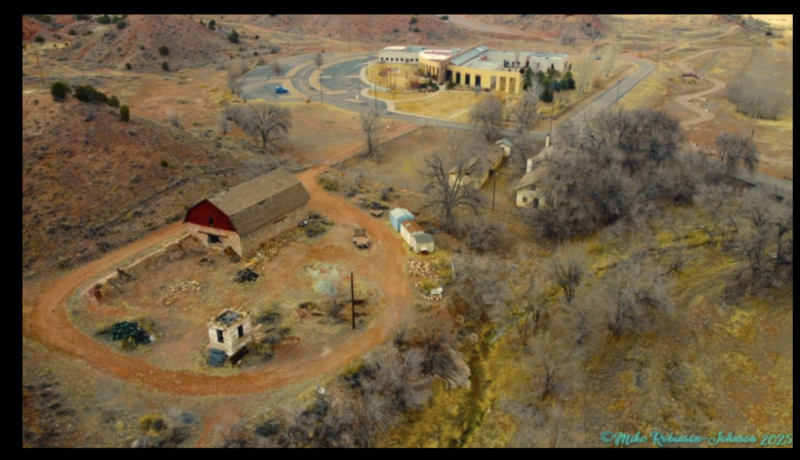
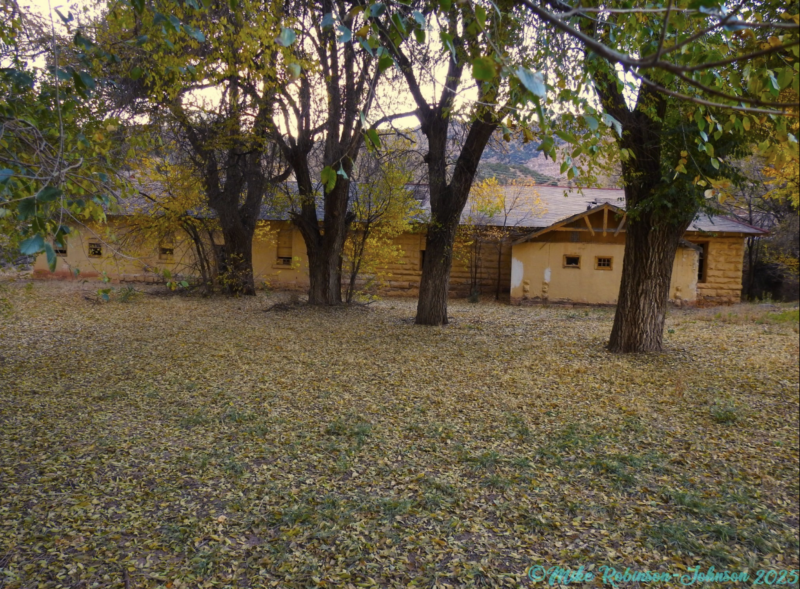
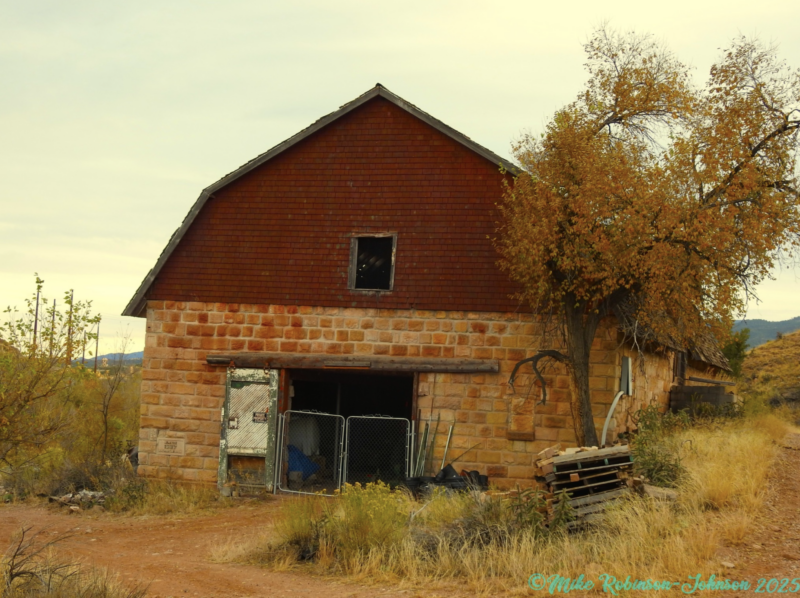
This is where the older prison farm equipment was stored-photo by Mike Robinson-Johnson
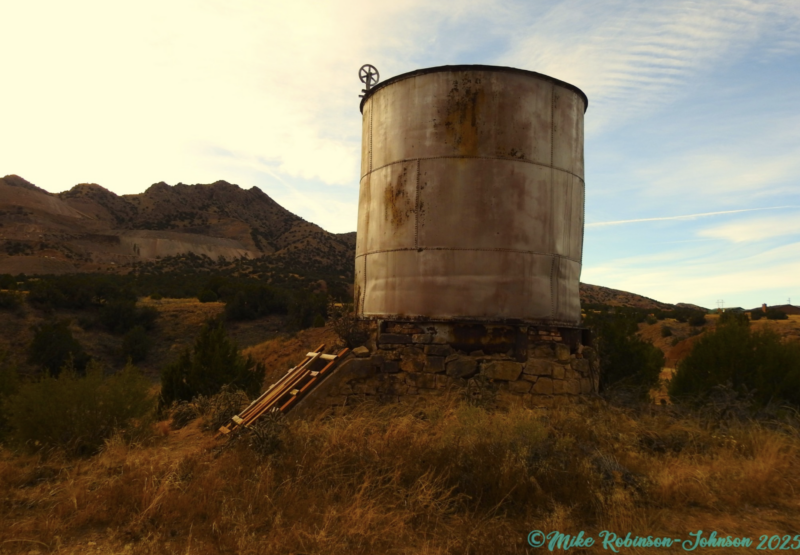
Water was stored up on the hill and gravity fed to water the crops and fields-photo by Mike Robinson-Johnson
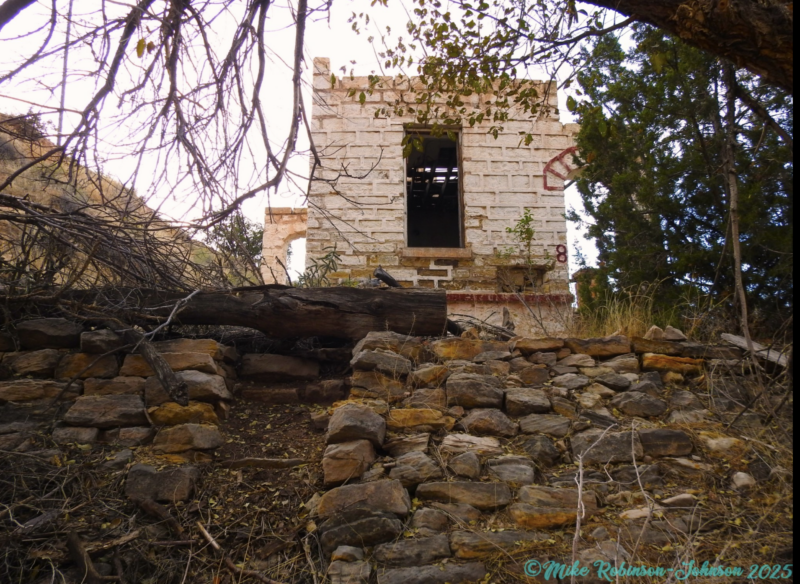
One of the edge towers to the property, prison guards would be stationed here watching the inmates work the fields below-photo by Mike Robinson-Johnson
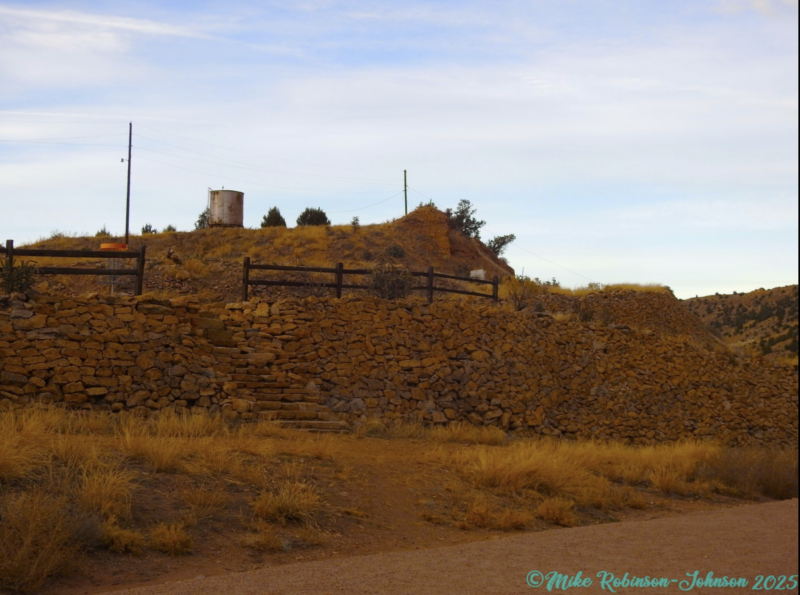
Also take notice the water tower up on the hill-photo by Mike Robinson-Johnson
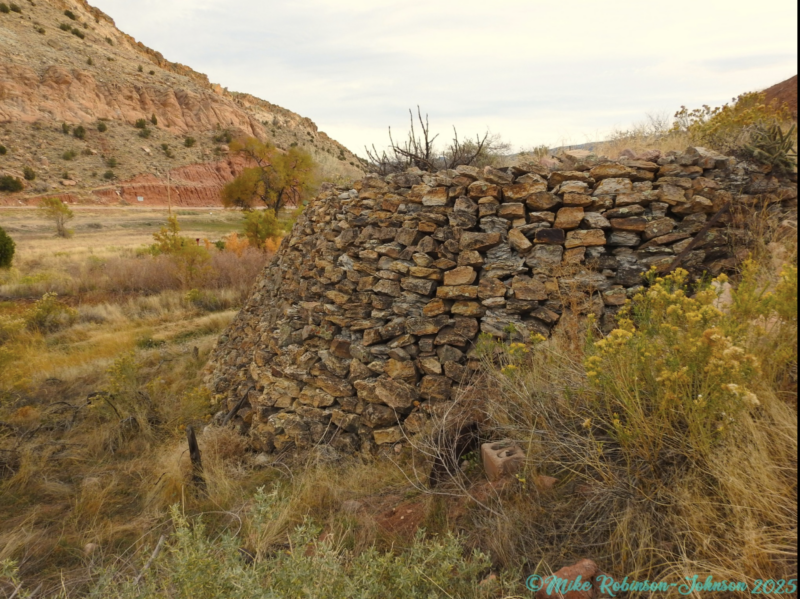
I wonder just how many of these rocks were hand-picked from the fields themselves during plowing-photo by Mike Robinson-Johnson
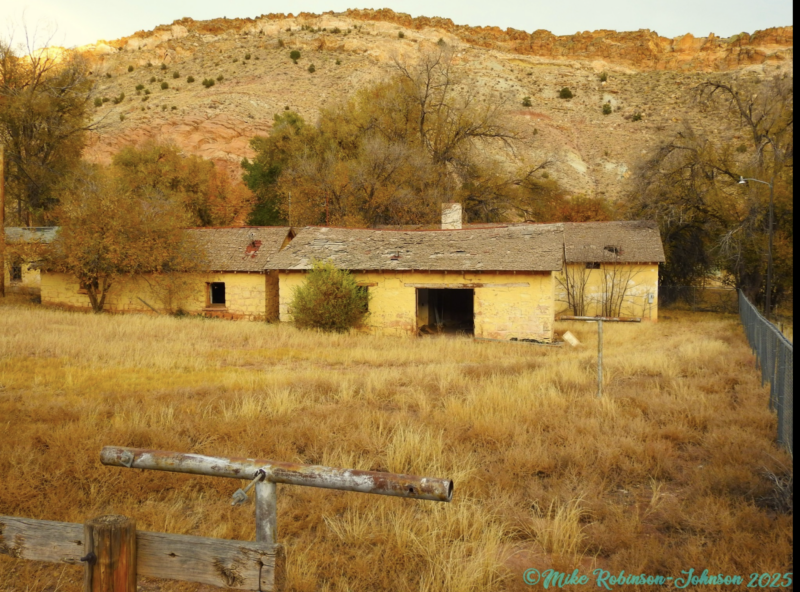
Notice the cloths line that was along the edge of their housing complex–photo by Mike Robinson-Johnson
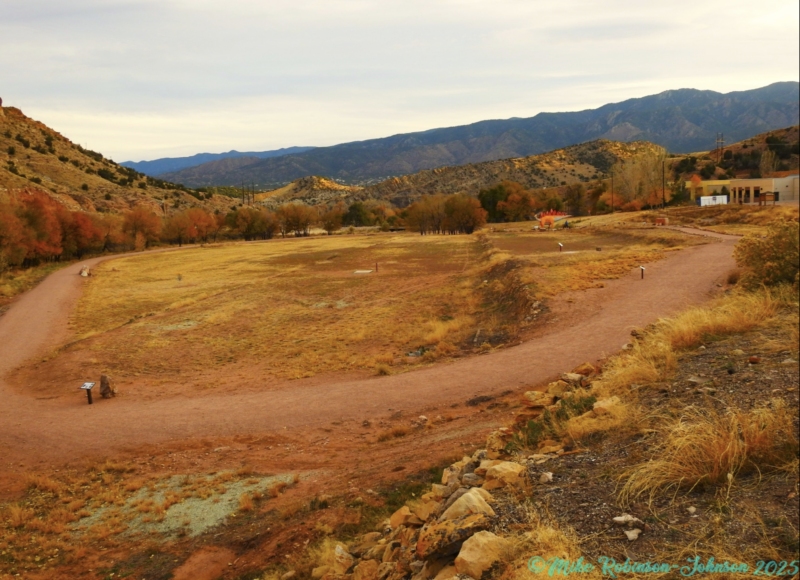
Notice the distinct levels. these would’ve been separate fields–photo by Mike Robinson-Johnson