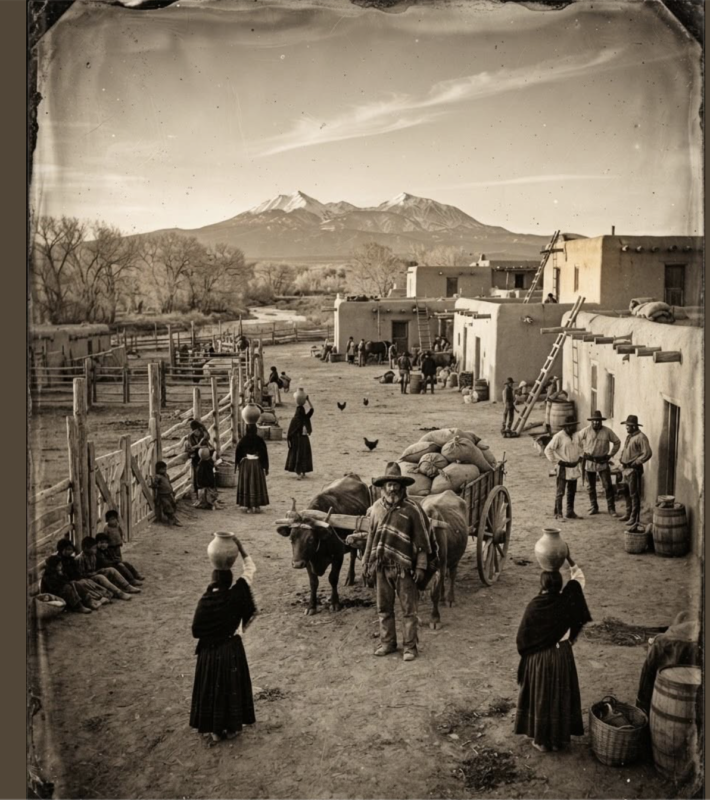
The town of Walsenburg, Colorado, started out with a Spanish name. Hispano families built it as La Plaza de los Leones.
In the early 1860s a rancher named Don Miguel Antonio León led several dozen families into the Cucharas Valley. They built adobe homes around a plaza below the Spanish Peaks. The town sat on a busy trail, and it grew into the trade center of the region.
In 1870 a German immigrant named Fred Walsen moved into the plaza and ran a general store. That same year the new post office took his name. When the town was incorporated in 1873, it kept his name too. In 1876 he opened the first coal mine, and coal took over the valley.
The plaza the León families built is still the heart of town. Their name is gone from the map. Most people who drive through on the highway never hear it.
Posted on Lost Mexican America Facebook Page on Sept 28, 2026. Please note, image is AI generated.
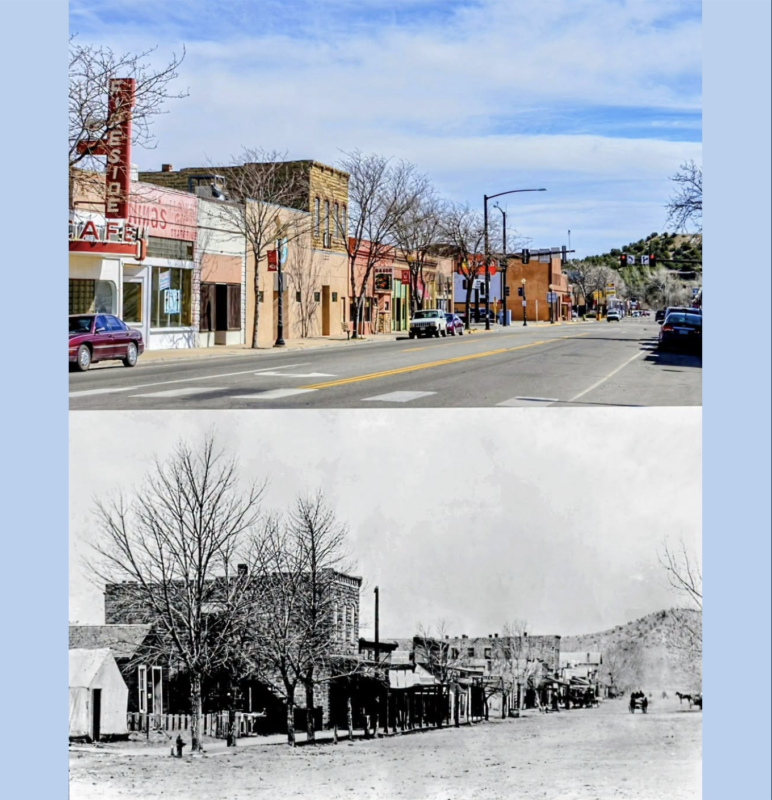
Shared on the Colorado Then and Now Facebook page, September 11, 2026
“I’m starting a new series on Main Streets in Colorado. Now some main streets are called Main Street. Some main streets are named something else but they are, in fact, the Main Street of that town and there are a couple examples where a road is called Main Street and used to be the main business area and thoroughfare of the town, but over time in history it has been changed to a less important part of the town.
So today we start with the small town of Walsenburg. This town is located between Pueblo and Trinidad right off of I-25. These two photos of Main St, were taken in 1879 and 2015.
Historically sitting at the intersection of old Native American trails, Main Street evolved over more than a century through a series of distinct eras.
Before Main Street was paved or platted, the community was settled in 1859. It served as a trading and cattle-drive hub. In 1870, German immigrant Fred Walsen opened a massive trading post and dry goods store at 7th and Main Street. His presence was so influential that the town renamed itself Walsenburg.
Originally, the town’s center sat closer to the Cucharas River. However, a devastating flood in 1878 destroyed the southern end of town. After that, the main business sector was moved further uphill to higher ground. The Huerfano County Courthouse was relocated to 5th and Main in 1882.
The arrival of the railroad and the discovery of nearby coal deposits triggered a massive economic boom, turning Main Street into a 24-hour commercial strip packed with miners, travelers, and immigrants. By 1900, the census recorded 26 different nationalities in Walsenburg. Main Street bustled with general stores, hotels, boarding houses, and 24-hour “lunch counters” catering to different shifts of miners. The famous gunman Robert Ford (who shot Jesse James) operated a saloon and gambling house right off Main Street.
Today, Main Street functions largely as a historic district that honors its multi-layered past. Visitors walking Main Street today can view a large, colorful mural at 418 Main Street (painted in 1991), which depicts the eccentric and notable historical characters of Huerfano County’s past.”
Original photo provided courtesy Denver Public Library Digital Collection
For more Walsenburg History, please visit: